Garden Clearance in Waterloo
Garden clearance in Waterloo should leave outdoor space ready for sensible next steps, whether that means a tidier lawn, a clearer side return, or the removal of accumulated green waste and unwanted items. Our service is focused on practical clearance work that helps residents, landlords and property managers deal with overgrown or cluttered gardens without turning the job into a larger upheaval than it needs to be. The aim is straightforward: clear the material, separate what can be handled responsibly, and leave the space easier to use.
We deal with common garden clearance tasks such as cuttings, branches, leaves, soil, broken garden items and mixed outdoor waste. Where access is limited, the work can be planned around gates, shared walkways or basement steps, so the clearance is handled in a way that suits the property rather than forcing a one-size-fits-all approach. If you are comparing options, you can request a quotation once you know the type and amount of material involved.
For some properties, the main need is a seasonal tidy-up after pruning or maintenance; for others, it is clearing a garden that has been left to build up over time. In both cases, the work benefits from a careful start, because mixed garden waste can include material that needs separating before it is moved. Useful planning begins with an honest view of what is present, what is bulky, and whether any items need to be kept aside rather than removed.
Garden waste and overgrowth clearance
Garden waste and overgrowth clearance covers the removal of organic material that has built up around borders, paths, sheds and fences. This can include hedge trimmings, grass cuttings, ivy, brambles, dead plants and other debris that makes a garden difficult to manage. Clearing this material can improve access to planting areas and paths, but the work still needs to be handled carefully so that useful soil, rooted plants or reusable edging materials are not taken away by mistake.
When overgrowth is the main issue, we can focus on the sections that are blocking normal use of the garden rather than treating every area in the same way. That might mean reducing dense growth first, then removing the loose waste once the space is accessible. In some gardens, the better approach is to work from the perimeter inward so that fences, sheds and paved areas are not damaged. Practical clearance is often about sequencing as much as removal.
The main factors affecting the work are usually the volume of waste, the mix of materials and how easy it is to reach the garden. If waste has already been bagged, stacked or cut into sections, the job may be simpler to organise, but unbagged material can be dealt with too. For a clearer picture of charges, it is sensible to ask for a quote that reflects the actual load and access conditions rather than guessing at a standard price.
Mixed outdoor items and garden furniture
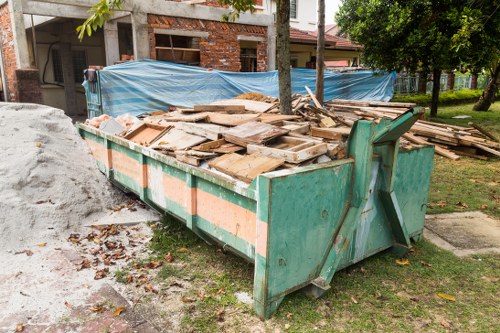
Mixed outdoor items and garden furniture clearance is useful when the garden contains more than green waste alone. Broken planters, worn chairs, damaged tables, plant pots, toys, ornaments and other outdoor items often accumulate alongside cuttings and general debris. This kind of clearance needs a more careful approach because the load may contain recyclable materials, reusable pieces and waste that should be separated before removal.
We also help where the garden holds items from a previous project, such as leftover timber, edging, old sleepers or dismantled structures. If pieces are awkward or partially fixed in place, they may need to be separated before they can be moved out safely. The key is to avoid forcing the work, especially where items are near glass, paving or planting that the customer wants to keep. Clear access and a sensible order of removal make the job more controlled.
For customers arranging this type of clearance, it helps to note which items are staying and which are going. A brief list is often enough to decide whether the job is mainly green waste, bulky outdoor furniture or a combination of both. That makes it easier to prepare a quotation that reflects the work properly, and it avoids misunderstandings about what is included. Plain, accurate details are usually more useful than a long description.
Working around access, bags and heavier garden debris
Not every garden clearance is a simple matter of lifting lightweight waste into a collection vehicle. Some jobs involve dense bags of soil, broken paving pieces, compacted branches or damp material that weighs more than it first appears. Access also matters: a long carry through a property, a narrow side passage or a shared entrance can affect how the clearance is organised. These practical details should be considered before the job begins.
One sensible approach is to group similar material together before removal. Green waste can be kept separate from hard items, and reusable garden materials can be identified before they are mixed in with the rest. This helps the clearance move efficiently and reduces the risk of suitable material being sent away unnecessarily. It also means any part of the job that needs extra handling can be planned in advance, rather than discovered halfway through.
For a quotation, the most useful information is usually the type of waste, approximate amount and access route. Photos can help when a garden is particularly cluttered, but they are not a substitute for a clear description. If there are locked gates, shared areas or restrictions on vehicle access, it is better to mention them early. That way, the estimate is based on the real job rather than on a simplified assumption.
Garden clearance for landlords and property changes

Garden clearance for landlords and property changes is often needed between tenancies, after a sale, or before maintenance work begins. In these situations, the garden may need to be cleared quickly enough to allow inspection or follow-on work, but the removal still needs to be done with care. The property might include neglected borders, leftover outdoor belongings or a combination of waste left from previous occupants and overgrown planting.
Where a garden is being prepared for new use, we can remove the clutter that prevents the space from being assessed properly. That may include old compost bags, broken pots, damaged garden features and general outdoor rubbish. The purpose is not to redesign the space, but to remove what is in the way so that the garden can be handed on, maintained or improved by the next trade or occupier. A straightforward clearance often makes later decisions much easier.
This type of work is often best arranged with a simple breakdown of what must stay on site and what can go. If there are boundary items, service pipes, irrigation parts or other fittings that should not be disturbed, they should be identified before removal starts. A concise quotation request saves time for everyone and gives a more realistic basis for planning the clearance properly.
Recycling, sorting and responsible handling
Garden clearance is not only about taking material away; it also involves sorting different types of waste so that suitable items are handled correctly. Green waste, timber, metal fixtures, plastics and mixed debris may all appear in the same garden, but they do not all need to be treated in the same way. Separating material early can improve the efficiency of the job and support more responsible disposal decisions.
For example, branches and plant matter may be grouped differently from cracked planters or broken fencing components. Some items may still be reusable, while others are clearly at the end of their life. The better the separation, the easier it is to decide what can be recovered and what should be removed as waste. This is especially helpful where the garden contains materials from several different jobs or seasons of upkeep.
Customers often want a practical balance between tidying the site and avoiding unnecessary removal of useful material. That is why it helps to describe the mix of waste rather than simply saying that a garden needs clearing. If the job includes compost, rubble, timber offcuts or damaged outdoor fittings, those details affect the shape of the work and the quotation that follows. Clear sorting is one of the most useful parts of the process.
What to include when asking for a quotation
When asking for a quotation, a few basic points are usually enough to start the conversation. It helps to note the approximate size of the garden section involved, the main types of waste, whether anything is especially heavy or awkward, and how easy it is to reach the material from outside. If some items are to remain on site, it is worth making that clear at the same time so they are not included by mistake.
If the garden has several different areas, a short room-by-room style note can also help, even though the work is outdoors. For instance, you might mention the front strip, the rear lawn, a side return or the area around a shed. That gives a better idea of how the clearance is likely to be organised. It is also helpful to say whether the garden is simply untidy or whether growth is dense enough to block access to features such as bins, storage or paving.
A simple quote request is usually the best starting point: tell us what needs removing, what needs staying, and whether the site has any access limits. If you are ready to move forward, ask for a quotation and the job can be assessed on that basis.
Garden spaces, paths and structural features
Many garden clearance jobs include more than the open lawn or planting beds. Paths, patios, retaining edges, bin areas and shed surrounds can also become crowded with waste or unused items. Clearing these sections can restore the practical layout of the garden and make it easier to move around the property. Because these areas often contain fixed features, the work needs to be careful and deliberate rather than rushed.
Where there are structures in the garden, the clearance may need to work around them first and remove loose material afterwards. This avoids unnecessary strain on gates, panels or paving and helps protect the parts of the garden that are staying in place. If items are leaning against walls or stacked near fences, they may need to be lifted out in stages so that nothing is dragged across the surface beneath. That approach is simple, but effective.
It can also be useful to decide in advance whether the main goal is full clearance or partial tidying. Some customers want every loose item removed, while others need only a selected area cleared before works begin. Both are valid approaches, but they are different jobs and should be quoted that way. That is another reason why a short, accurate description is more useful than a broad request for “garden clearance†alone.
About Waterloo
Waterloo is an area on the south bank of the River Thames, immediately opposite the central London districts around the Embankment and the Strand. Its name is closely associated with Waterloo station, one of the capital’s major rail termini, and with the surrounding transport and civic landscape that developed during the nineteenth and twentieth centuries. The station complex is a defining feature of the district, linking mainline rail, Underground services and nearby pedestrian routes across a busy part of central London. Within the wider area, the South Bank lies close by, giving Waterloo a strong connection to the river frontage, cultural venues and public walkways along the Thames. The station’s architecture and later expansions have left the district with a layered appearance, where large transport buildings stand alongside streets of commercial premises, housing and public institutions. Nearby landmarks include the Old Vic theatre to the south, the London Eye across the river, and the riverside paths that run toward Westminster and Lambeth. Waterloo Road and surrounding streets carry a mix of offices, residential buildings, eateries and everyday services, while the neighbourhood’s edges meet several distinct central London districts. The area also links to cultural and leisure destinations such as the Southbank Centre and the National Theatre, both of which are part of the broader riverside environment that has shaped Waterloo’s identity. Although heavily urban, the district still offers moments of open space and movement, particularly around the station approaches, the river walk and nearby public squares. Its character is therefore a combination of transport intensity, civic activity and access to some of London’s best-known cultural and riverside settings.
Household gardens and small-scale clearances
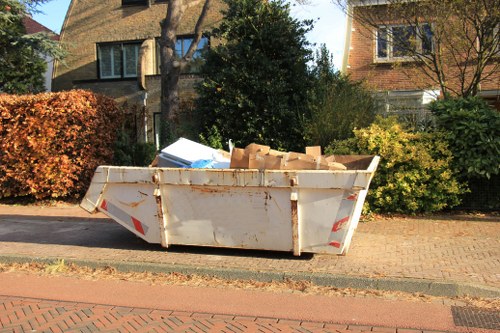
Some garden clearance jobs are closely connected to household routines rather than major landscaping work. A back garden may need clearing after routine pruning, while a front yard might hold old pots, a damaged bicycle, plant bags or broken outdoor storage. These smaller jobs still benefit from professional handling because the waste can be mixed and difficult to move without leaving a mess behind. The aim is to tidy efficiently without turning the job into a disruption.
We can work on single awkward items as well as fuller clearances, provided the overall scope is clear. In domestic settings, the main challenge is often not volume alone but variety: one corner may have cut branches, another may hold damp bags or broken household items that were moved outdoors over time. A sensible approach is to remove the larger obstacles first, then collect the lighter material once the space is open. That keeps the work organised and avoids double handling.
If the garden includes both waste and items that might be kept for reuse, it is best to separate them before the clearance starts. This makes it easier to avoid unnecessary removal and helps when the final quotation is being prepared. Small details such as whether bags are tied, whether compost bins need emptying and whether items are stacked or scattered can all affect the time needed on site. They are worth mentioning when you make contact.
Commercial outdoor areas and shared spaces

Commercial outdoor areas and shared spaces can also require garden clearance, particularly where bins, pathways, planting borders or communal corners have collected waste over time. In these settings, the work often needs to fit around other users of the property, so organisation matters as much as removal. The clearance may involve leaving access routes open while waste is moved, or arranging the work so that shared entrances and service areas stay usable.
Commercial outdoor clearance can include leaves, cuttings, damaged planters, old display items and general debris that has built up around entrances or side spaces. Where several people use the same area, a tidy and methodical approach is important because the work needs to minimise interruption while still achieving a proper clean-up. If there are management instructions for the site, those should be identified before the job begins so the clearance follows them correctly.
If you need garden clearance in Waterloo for a home, rental property or business site, the most effective next step is to describe the waste, the access and the area to be cleared. Send the details, and a quotation can be prepared from there.