Terrace access rubbish collection solutions Waterloo
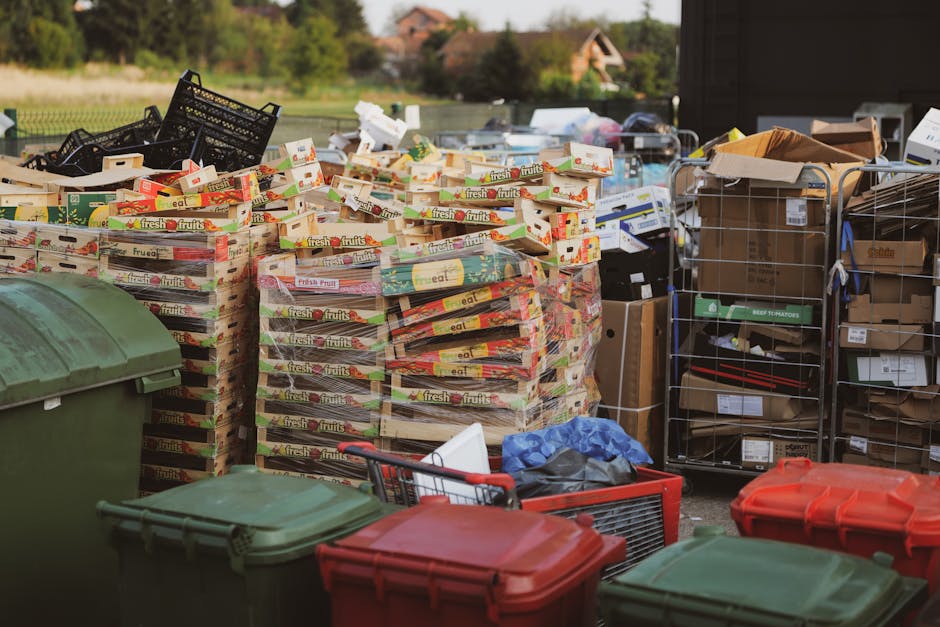
If you live or work in Waterloo and have to move rubbish through a terrace, narrow passage, shared entrance, rear alley, or awkward back access, you already know the problem: the waste itself is only half the issue. The real challenge is getting it out cleanly, safely, and without annoying neighbours, damaging walls, or turning a simple clearance into a half-day ordeal. That is exactly where Terrace access rubbish collection solutions Waterloo come in.
This guide explains how terrace access waste collection works, why it matters in a busy part of London, and what practical steps make the whole process smoother. Whether you are clearing a flat, a house, a garden, or builder's leftovers, you will find real-world advice here - the kind that helps you avoid the usual headaches.
One quick note: terrace access jobs can look straightforward from the street, and then you walk to the back and discover a tight turn, a steep step, or a neighbour's bike blocking the route. Happens all the time.
Why terrace access rubbish collection matters in Waterloo
Terraced streets and closely packed homes create a very specific kind of waste problem. Access is often shared, tight, or partially obstructed. You may be dealing with front-step loading, a narrow side return, a small rear yard, or a path that can barely fit one person carrying a bulky item. In Waterloo, where space is at a premium, that matters more than people expect.
The main issue is not just convenience. Poor access increases the risk of damage, delays, neighbour complaints, trip hazards, and awkward handling of heavy items. A sofa scraping a painted wall is irritating. A wheelie bin knocked into a parked car is worse. And if rubbish is left in a communal area "just for a minute", it can quickly become an obstruction.
Good terrace access rubbish collection solutions are about planning around the property rather than forcing the waste to fit the property. That shift in thinking makes a big difference. You are not just removing junk. You are protecting the route, the building, and everyone who shares it.
Expert summary: The best terrace access clearance jobs are rarely the fastest-looking ones. They are the ones planned around the route, the lift points, the neighbour flow, and the final loading point. That sounds simple, but it saves time, stress, and avoidable damage.
In a place like Waterloo, that approach is especially useful for flats over terraces, small townhouses, rental properties between tenancies, and properties where the front and rear access tell two very different stories. You will notice this fast if you have ever tried to carry broken furniture down a narrow corridor while someone is trying to get past with shopping. Not ideal, frankly.
How terrace access rubbish collection works
At its core, terrace access rubbish collection is a planned removal process adapted to restricted access. The team identifies the best route in and out, assesses what can be moved safely by hand, and decides whether items need to be broken down before loading. The goal is to remove waste efficiently without forcing it through spaces that are too tight or too fragile.
In practical terms, the process often follows a pattern like this:
- Review the access route: front door, hallway, rear gate, alley, side passage, stairs, or shared courtyard.
- Identify the waste types: general rubbish, furniture, garden waste, builders' waste, or mixed household items.
- Check for obstacles: tight corners, low ceilings, fragile banisters, parked vehicles, locked gates, or communal access points.
- Choose the handling method: direct carry, dismantling, bagging, boxing, or staged removal.
- Load safely into the vehicle and separate recyclable materials where possible.
When the route is especially awkward, timing matters too. Early morning access can be easier in some terrace streets, while quieter periods help if you need to move items through a shared entrance. Sometimes the difference between a smooth clearance and a messy one is simply doing the job before the street gets busy.
If you are arranging a broader clearance, it can also help to think about the type of property involved. A flat clearance service may be more suitable for upper-floor terrace conversions, while house clearance or home clearance may suit full-property jobs with mixed contents.
For heavier or awkward loads, items are often separated before they reach the vehicle. That might mean taking drawers out of cabinets, removing table legs, or splitting a bulky item into smaller pieces. Small thing, big difference.
Key benefits and practical advantages
Terrace access solutions are not just for difficult properties. They are for anyone who wants the job done properly first time. The main benefits go beyond simple convenience.
- Less risk of damage: Narrow hallways and tight stairwells are hard on walls, corners, door frames, and flooring. A planned route reduces that risk.
- Faster removal: Good access planning saves time because the team knows what to expect before lifting starts.
- Better neighbour relations: Quiet, tidy movement through shared or close-access spaces is less disruptive.
- Safer handling: Heavy and awkward items are easier to manage when the route has been thought through.
- Cleaner finish: Rubbish is removed in an orderly way rather than dragged, dropped, or staged badly.
- More flexibility: Terrace jobs can often be adapted to mixed loads, from old furniture to general waste and light builders' debris.
There is also a mental benefit, if we are being honest. Once the route and access are sorted, the rest of the job feels lighter. People breathe easier. That sounds a bit dramatic, but anyone who has cleared a cramped terrace on a rainy Tuesday morning will know what I mean.
For mixed or bulky waste, services such as waste removal and furniture disposal can be especially helpful because they are designed for proper lifting, sorting, and transport rather than ad hoc self-removal.
Who this is for and when it makes sense
Terrace access rubbish collection solutions in Waterloo are useful for a wide range of people. You do not need a major renovation or a huge pile of waste to benefit from them.
- Homeowners clearing lofts, spare rooms, sheds, or front gardens with limited access.
- Landlords needing between-tenancy clearances in terraced or converted buildings.
- Tenants moving out and discovering bulky items that cannot be left in the communal bin area.
- Estate and property managers dealing with waste from occupied and unoccupied terrace homes.
- Tradespeople who need builders' debris cleared from tight access sites.
- Small offices or home businesses operating from converted terrace properties.
It also makes sense when the job seems "small" but access makes it awkward. A few broken chairs, a mattress, and some bagged rubbish can be more troublesome than a larger but easier load. Access changes everything. The pile is not always the problem.
If you are clearing a workspace inside a converted terrace, a dedicated office clearance approach may be more efficient. For renovation waste, builders' waste clearance can be the better fit, especially where plasterboard, timber offcuts, packaging, and rubble need handling with care.
Step-by-step guidance
If you want the process to go smoothly, start with the access route before you start thinking about the rubbish pile. That order matters.
1. Walk the route properly
Look at every turn, doorway, step, and threshold. Check whether the path is wide enough, whether anything swings open into the route, and whether the floor surface is slippery or uneven. In older terrace properties, a route can look fine until you notice the awkward landing or a low beam halfway down the stairs.
2. Separate waste by type
Put furniture, bags of general waste, recyclables, and any building materials into separate groups if you can. This makes handling easier and can improve sorting later. It also stops the process becoming one giant mixed heap. No one wants that.
3. Identify heavy or awkward items early
Mattresses, wardrobes, desks, white goods, and broken shelving are usually the troublemakers. If an item will not turn easily through a narrow corridor, decide whether it should be dismantled before the move begins.
4. Protect the route
Use basic protection where needed: door stops, edge guards, floor coverings, and clear lighting. Even a small patch of protection can prevent scuffed paint or chipped plaster.
5. Stage the loading area
Choose a sensible spot near the vehicle or exit where items can be placed temporarily without blocking access. In a terraced street, that might mean working in smaller batches rather than creating a big pile outside.
6. Load with the final destination in mind
Think about what needs to come off first at the vehicle. Heavy items usually go in first, but the order should also reflect what is easiest to load given the route. The loading plan saves people from unnecessary lifting.
7. Finish with a full sweep
Once the waste is gone, check the access route again. Look for screws, packaging straps, splinters, broken glass, or anything left behind in corners and under steps. The last 10 percent often takes the longest, annoying as that is.
Expert tips for better results
Here are the small decisions that tend to make terrace jobs go better than average. These are the sorts of things people only learn by doing, or by having one job go sideways and never wanting that again.
- Measure the narrowest point first. Don't measure the widest doorway and assume the rest will be fine. The awkward bit is usually somewhere else.
- Take photos before the clearance. This helps with planning and gives a clearer picture of the route and volume.
- Break down items early. If a wardrobe, bed frame, or desk can be safely dismantled, do it before lifting starts.
- Keep neighbours in mind. A quick warning can prevent misunderstandings in shared-access terrace properties.
- Avoid overfilling bags. Overpacked sacks are heavier, more likely to split, and much harder to carry through tight spaces.
- Leave a clear exit path. It sounds obvious, but tools, plants, recycling boxes, and kids' scooters have a habit of appearing exactly where they should not.
For properties with tight internal access and more varied contents, it can be useful to compare broader options such as furniture clearance, garage clearance, or loft clearance. The right service depends on where the waste is sitting and how it reaches the exit.
My honest advice? Plan for the awkward 20 seconds, not the easy-looking five minutes. That is where most terrace jobs either glide or grind.
Common mistakes to avoid
A lot of access problems are completely avoidable. The good news is that once you know the usual traps, you can sidestep them pretty easily.
- Assuming the route is fine without checking: A quick glance is not enough. You need to walk it.
- Forgetting shared access rules: Communal hallways, side gates, and back alleys may have practical or behavioural limits.
- Ignoring weight distribution: Some items become awkward not because they are large, but because they are unbalanced.
- Leaving the job to the last minute: When access is tight, rushing leads to mistakes.
- Trying to move unsuitable items alone: If it feels like a two-person lift, it probably is.
- Not checking recycling or reuse potential: Some materials may be better separated before loading rather than mixed into general waste.
Another common one is underestimating how wet or muddy the route may be after a bit of London weather. A damp rear passage or slippy step can turn a routine clearance into a cautious shuffle. Not ideal, but very fixable with planning.
If your property also has security or building-management concerns, it is worth reviewing general site expectations and practical safeguards through pages like insurance and safety guidance and the health and safety policy.
Tools, resources and recommendations
You do not need a complicated toolkit to handle terrace access rubbish collection well. You just need the right basics and a sensible approach.
Useful practical items
- Gloves with a decent grip
- Strong rubble sacks or heavy-duty bin bags
- Basic hand trolley or sack truck where access allows it
- Protective coverings for floors and corners
- Torches or portable lighting for darker stairwells and rear paths
- Labels or tape for separating items by type
Good planning habits
- Photograph access points before the job
- Clear the route before the team arrives
- Keep parking or loading space in mind
- Set aside valuables, documents, and personal items in advance
- Confirm any building or tenant restrictions if the property is shared
Where the waste includes reusable items or large quantities of furniture, it is worth checking whether a dedicated route through recycling and sustainability is available in the wider clearance plan. It helps avoid throwing everything into one bucket, so to speak.
For pricing questions, a straightforward pricing and quotes page can help you understand what details matter most before the job is booked. A clear description of access, item type, and property layout usually leads to a more accurate estimate.
Law, compliance, standards, and best practice
For terrace access rubbish collection, the main compliance issue is usually not the terrace itself - it is how waste is handled, stored, moved, and transferred. In the UK, waste must generally be managed responsibly, and households, landlords, and businesses all have a duty to avoid careless disposal. That may sound dry, but it matters.
Best practice includes using a reputable waste carrier, keeping the site safe, and ensuring waste is taken to an appropriate facility. If you are a business, you should be especially careful about records and transfer arrangements. If you are a homeowner, the key issue is simply making sure your rubbish does not end up fly-tipped or left in a communal area because access was "too awkward to deal with".
In terrace properties, safety expectations are just as important as waste handling. That means keeping escape routes clear, avoiding blocked entrances, and moving items in a way that reduces risk to the people inside and outside the building. For a shared building, that can also mean being considerate about noise, timing, and obstruction.
If the clearance involves mixed loads from a converted terrace, office, or rented property, services such as business waste removal may be relevant where the waste is commercial in nature. If it is household-based, a home or house clearance approach is usually more appropriate.
The safest rule is simple: know what you are removing, know how you are moving it, and know where it is going. Everything else is detail, important detail, but still detail.
Options, methods, or comparison table
Different terrace access jobs suit different methods. Choosing the wrong one is where costs, delays, and sore backs start to appear.
| Method | Best for | Pros | Watch-outs |
|---|---|---|---|
| Direct hand-carry | Small, light, bagged waste | Simple and quick where access is straightforward | Can be slow if the route is tight or there are many trips |
| Dismantling before removal | Bulky furniture and awkward items | Makes narrow access much easier | Needs time, tools, and careful handling |
| Staged clearance | Mixed loads from terraces with limited exit space | Reduces congestion and improves control | Takes planning and a sensible staging area |
| Full-property clearance | End-of-tenancy or major decluttering | Efficient for multiple waste types | Requires good access assessment and prioritisation |
To be fair, the best method is often a blend. A terrace job might begin with dismantling one large item, move into hand-carrying smaller bags, and finish with a final sweep through the access route. That mixture is normal, not a sign the job is messy.
If the property is a compact converted terrace or maisonette, a flat clearance route may make the most sense. If it is a house with loft overflow and garden waste, combining loft clearance and garden clearance can be more practical than handling the waste in separate mini-jobs.
Case study or real-world example
Picture a typical Waterloo terrace conversion: a first-floor flat above a ground-floor entrance, with a narrow rear passage and a side gate that barely opens fully. The resident is moving out, and the pile includes a mattress, two broken chairs, a coffee table, half a dozen bags, and some loose packaging from a recent delivery spree. That sort of thing happens more often than people admit.
At first glance, it seems manageable. But the mattress will not turn cleanly at the back corner, the chairs have loose legs, and the passage is blocked by a plant pot and a bicycle. So the access plan changes. The route is cleared first, the furniture is separated from the bagged waste, and the awkward items are taken apart before moving them. The team keeps the passage free, works in small batches, and checks the final route for nails and splinters once everything is loaded.
The result is simple: no wall scrapes, no blocked entrance, no neighbour complaint, and no one carrying an overstuffed bag at chest height down a narrow corridor. That is the sort of outcome that looks easy only after it has been done well.
Sometimes the best success stories are the boring ones. No drama. No damage. Just a clean finish and everyone getting on with their day.
Practical checklist
Use this checklist before any terrace access rubbish collection in Waterloo:
- Walk the full access route from waste point to vehicle
- Measure the narrowest doors, turns, and stairs if needed
- Separate bulky items from bagged waste
- Break down furniture where safe and practical
- Clear loose obstacles from the route
- Protect floors, corners, and high-contact surfaces
- Check whether any shared access rules apply
- Keep valuables and personal papers out of the work area
- Confirm whether recycling or reuse sorting is needed
- Make sure loading space is ready before the removal starts
- Do a final sweep for debris, screws, and stray packaging
Checklist done well, the whole job feels calmer. Simple as that.
Conclusion
Terrace access rubbish collection solutions Waterloo are really about one thing: turning a difficult route into a manageable process. In a place where properties are close together, passages are narrow, and shared spaces matter, access planning is not a luxury. It is the difference between a smooth clearance and a stressful one.
If you prepare the route, separate the waste, think through the lifting order, and respect the building and the people around it, the whole job becomes far more straightforward. That is true whether you are clearing a single sofa, a full flat, or a mixed load after renovation.
Get a free quote today and see how much you can save.
And if you are still weighing things up, that is fair enough. A good terrace clearance is one of those jobs that feels much better once it is properly planned, and a little relief goes a long way.
Frequently Asked Questions
What does terrace access rubbish collection mean?
It means collecting and removing waste from a property where access is limited by a terrace layout, narrow passage, shared entrance, rear alley, stairs, or other awkward route. The focus is on safe movement through tight spaces.
Is terrace access waste collection more expensive?
It can be, depending on how difficult the access is, how much labour is involved, and whether items need dismantling or special handling. The simplest way to think about it is that access affects time, and time affects cost.
Can bulky furniture be removed through a narrow terrace hallway?
Sometimes yes, but not always in one piece. If the route is tight, furniture may need to be dismantled or carried in smaller parts. That is often safer than forcing it through and risking damage.
What if there is shared access with neighbours?
Shared access needs a bit more care. Keep routes clear, avoid leaving waste in communal areas, and consider timing so you are not blocking people coming and going. A short heads-up can prevent a lot of friction.
Do I need to separate rubbish before collection?
It helps a lot. Separating bulky items, bagged waste, and recyclable materials can make the job quicker and tidier. It also helps the team decide the safest way to move everything out.
How do I know if my terrace property is suitable for clearance?
Most are, but the route needs checking first. Look at door widths, stair turns, low ceilings, rear access points, and any obstacles. If you can walk the route without squeezing sideways, that is a decent sign.
What kind of waste is commonly removed from terrace properties in Waterloo?
Common examples include broken furniture, bagged household rubbish, old appliances, garden waste, light builders' debris, loft clutter, and end-of-tenancy leftovers. It is often a mix rather than one neat category.
Can terrace access rubbish collection include garden or loft waste?
Yes, provided the route from the garden or loft to the exit is workable. In fact, terrace properties often have waste building up in more than one place, so combining services can be efficient.
What should I do before the team arrives?
Clear the route, identify awkward items, move personal belongings out of the way, and check whether parking or loading space needs to be reserved. A few minutes of prep can save a lot of back-and-forth later.
Is it safe to move rubbish through a steep staircase?
It can be, but only with proper planning and the right lifting method. Steep stairs are one of the main risk points in terrace access jobs, so items need to be assessed carefully before anyone lifts.
Do I need to worry about compliance for household rubbish removal?
Yes, in the sense that waste should be handled responsibly and taken to an appropriate facility. The important thing is to avoid careless disposal, blocked communal areas, or anything that could become fly-tipping.
How can I get the most accurate quote?
Give a clear description of the property access, item types, approximate volume, and any obstacles. If possible, include photos. The more honest and specific the information, the better the estimate tends to be.
What if my terrace access is extremely tight?
Then the job may need a staged approach, dismantling, or a different removal method altogether. Extremely tight access does not always stop a clearance, but it does mean planning matters more than usual.